
Freezer Room Construction
Freezer Room Construction Sydney
From single-door storage freezers through to blast freezer facilities for high volume operators. A freezer room carries different demands to a coolroom: sub-zero temperatures held day after day put pressure on floors, seals and structure in ways a standard cold store never sees, so getting the design right matters more, not less.
Sub-Zero Is a Different Build
We have built cold storage for national operators including Woolworths, DHL, Arnotts and Aldi, along with freezer rooms for independent food processors, cold logistics operators and specialty growers. The same approach applies at every scale: understand the load the room needs to handle, design the floor and structure to suit it, and build it so it still performs the same way in ten years as it does on handover day.
How a Freezer Room Differs From a Coolroom
Coolrooms typically run above 0°C. Freezer rooms run well below it, commonly between -18°C and -25°C for standard storage, and -30°C or lower for blast freezing. That difference changes almost every part of the build. Freezer panels are thicker to hold thermal performance at sustained sub-zero temperatures. Doors need heated frames or heat trace to stop ice building up on seals, one of the most common failure points we see on freezer rooms built without it. And on-grade floors need frost heave protection, because ground beneath a permanently sub-zero floor will freeze, expand and eventually crack or lift the slab if it is not accounted for at the design stage.
Most commercial freezer rooms in Sydney take between three and eight weeks to construct, depending on size, temperature range and whether frost heave protection needs to be engineered into the floor. Blast freezer facilities and larger multi-bay builds generally sit at the longer end of that range.
Our Freezer Room Construction Process
Site Assessment and Load Calculation
We assess the site the same way we would for a coolroom (floor loading, access, power, drainage) then add freezer-specific factors: target temperature, expected stock turnover, forklift or pallet jack traffic, and whether the floor sits on grade or on an existing slab.
Panel Selection and Floor Design
Freezer rooms are typically built with PIR panels rather than EPS-FR, since PIR's higher thermal performance holds up better at sustained sub-zero temperatures without excessive panel thickness. Floor construction ranges from standard insulated flooring for freezers above -20 degrees to a fully engineered floor system with frost protection for lower temperatures or permanent on-grade installations.
Preventing Frost Heave
The step that gets missed on freezer rooms built without proper design input, and the one that causes the most expensive problems down the line. We address it at design stage through appropriate floor insulation and, where the site requires it, underfloor heat trace. Retrofitting frost protection into a damaged floor is far more disruptive and costly than designing it in correctly the first time.
Installation, Doors and Refrigeration
We build out the structure, fit heated or heat-traced doors to prevent ice buildup and seal failure, and integrate refrigeration sized to the room's actual load rather than a generic estimate. Builds meet the relevant NSW food safety and building requirements for the site and its intended use.
Handover and Aftercare
Before handover we test the room under load to confirm it reaches and holds target temperature and that doors and seals perform correctly. We also talk you through operation, including why door discipline matters more in a freezer than a coolroom.
Industries We Build Freezer Rooms For
Freezer room requirements vary significantly by use, from long-term bulk storage to rapid blast freezing, which is why design starts with how the room will actually operate. We build freezer rooms for:
- Food processing and manufacturing
- Cold storage and logistics
- Seafood and meat processing
- Pharmaceutical and biological storage
- Hospitality and food retail
If your operation needs blast freezing capability or a specific temperature range not listed here, get in touch and we will work through what the room needs to do.
Recent Freezer & Cold Storage Work
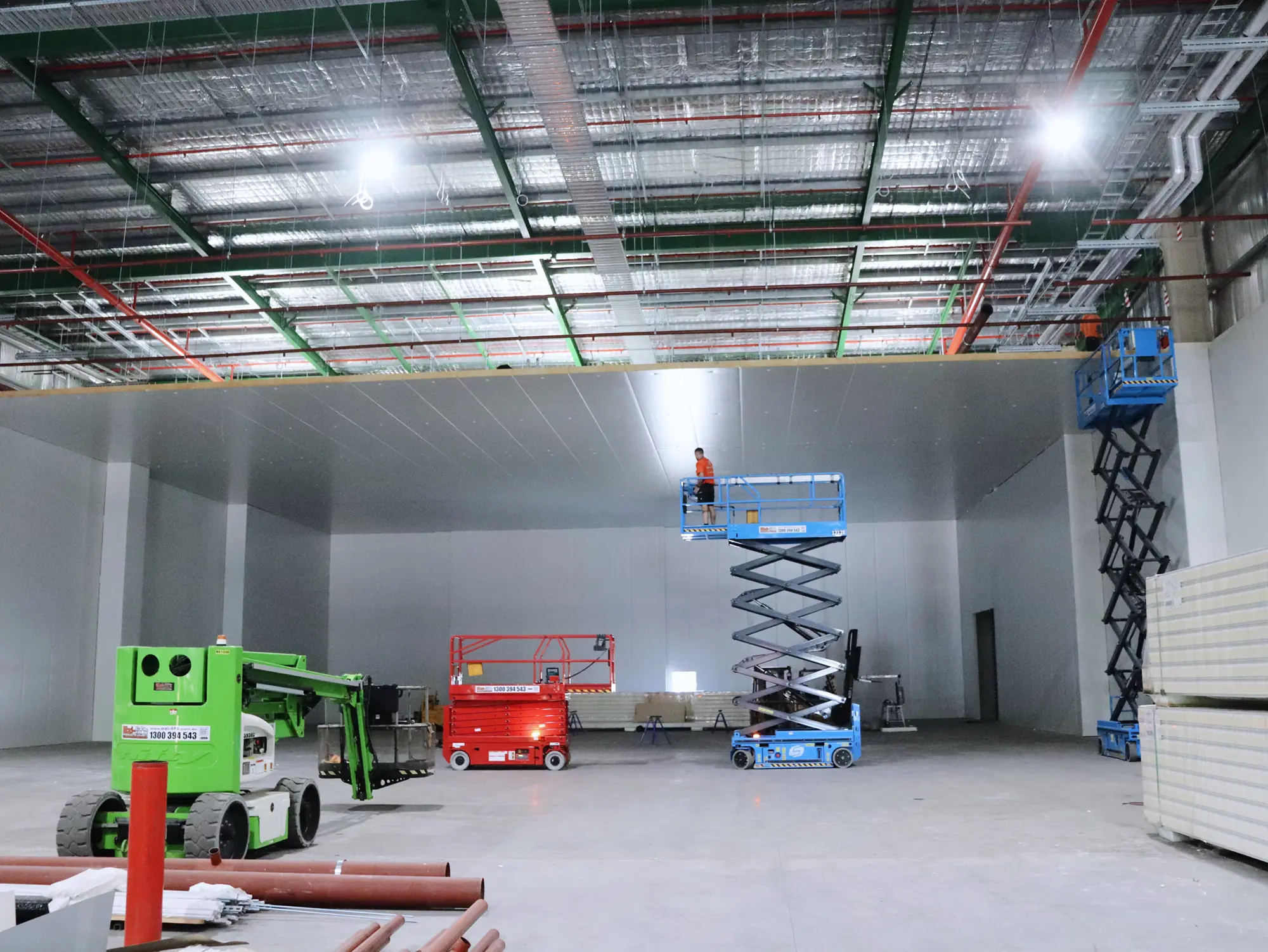
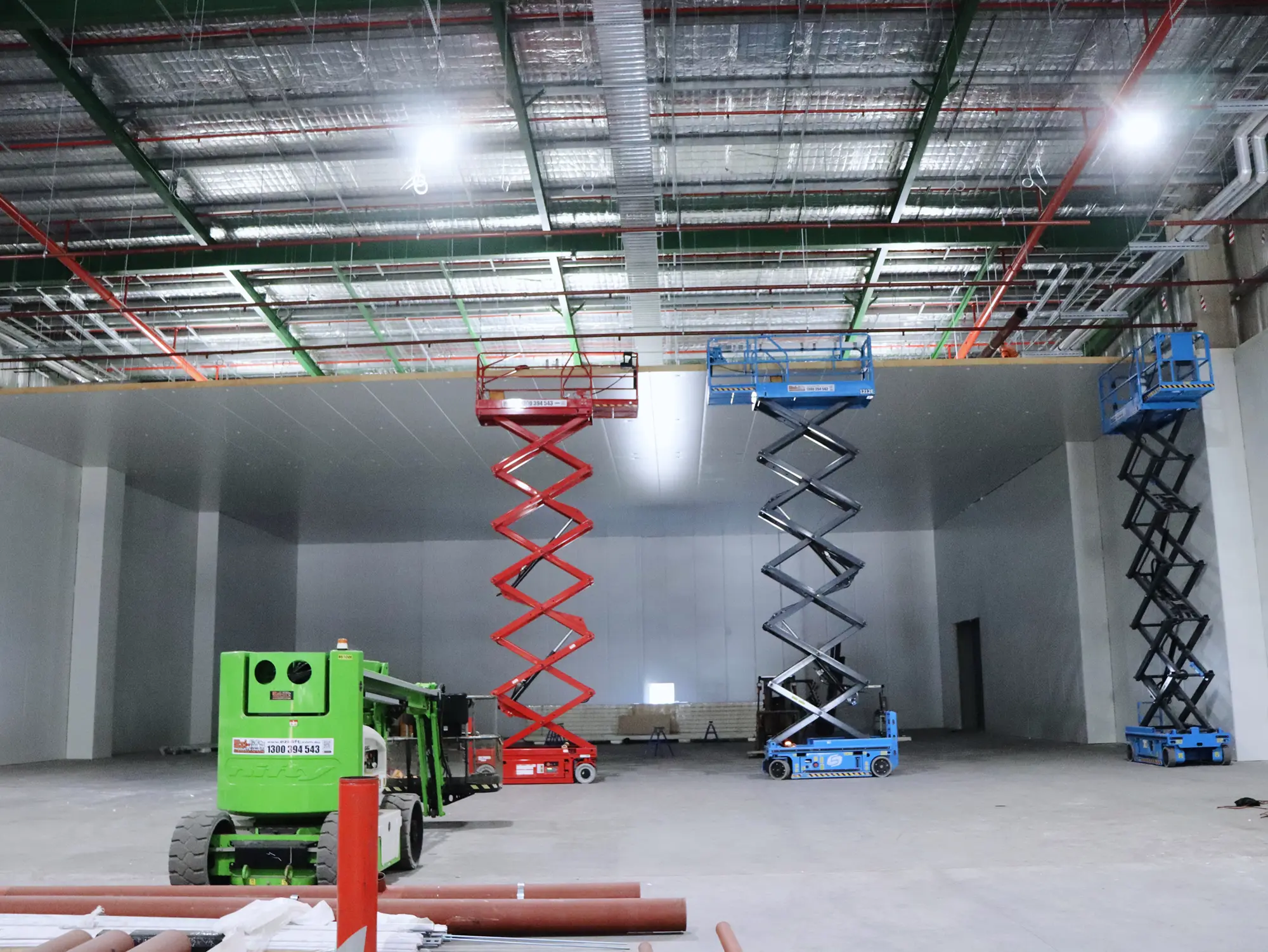
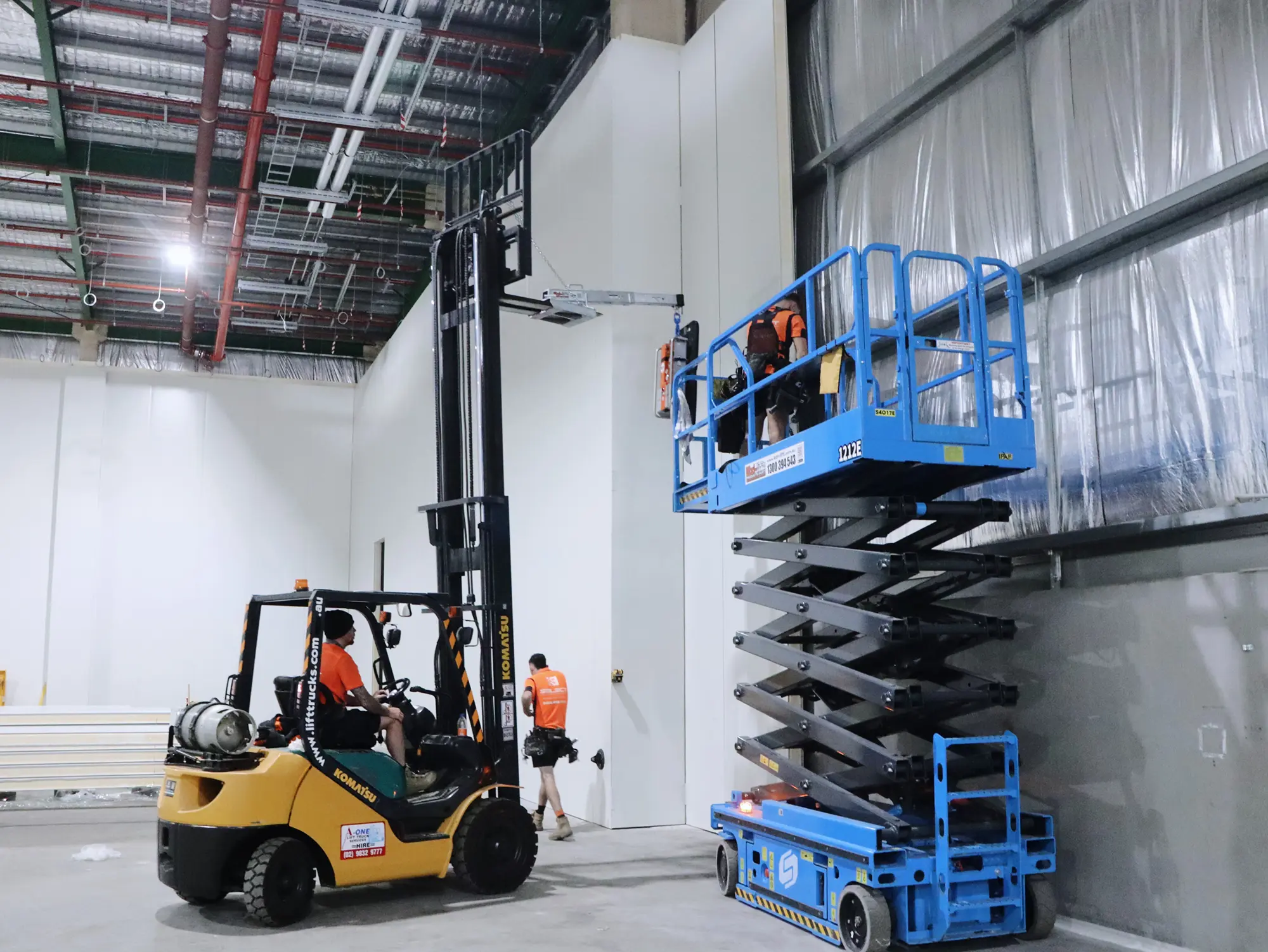
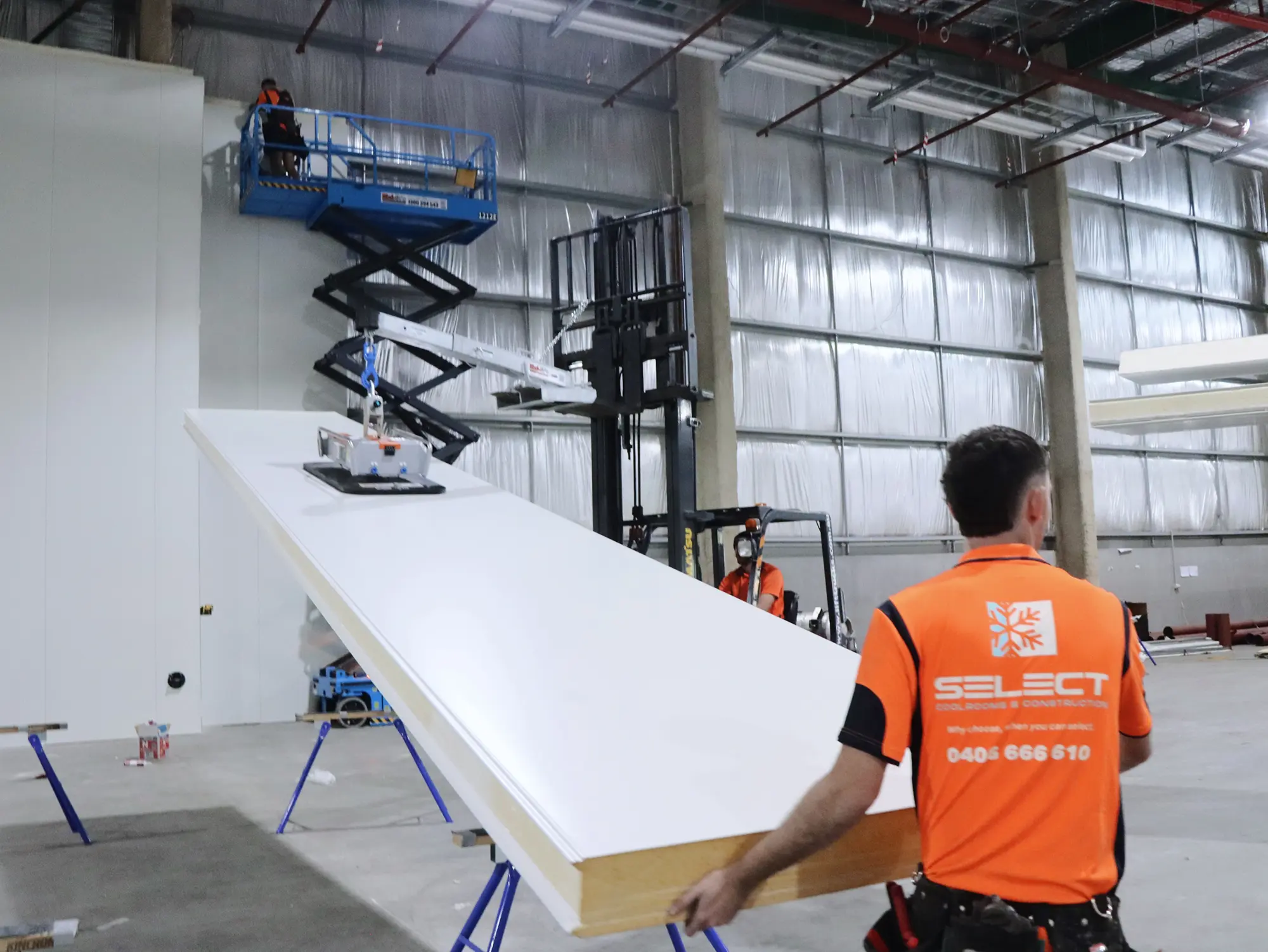
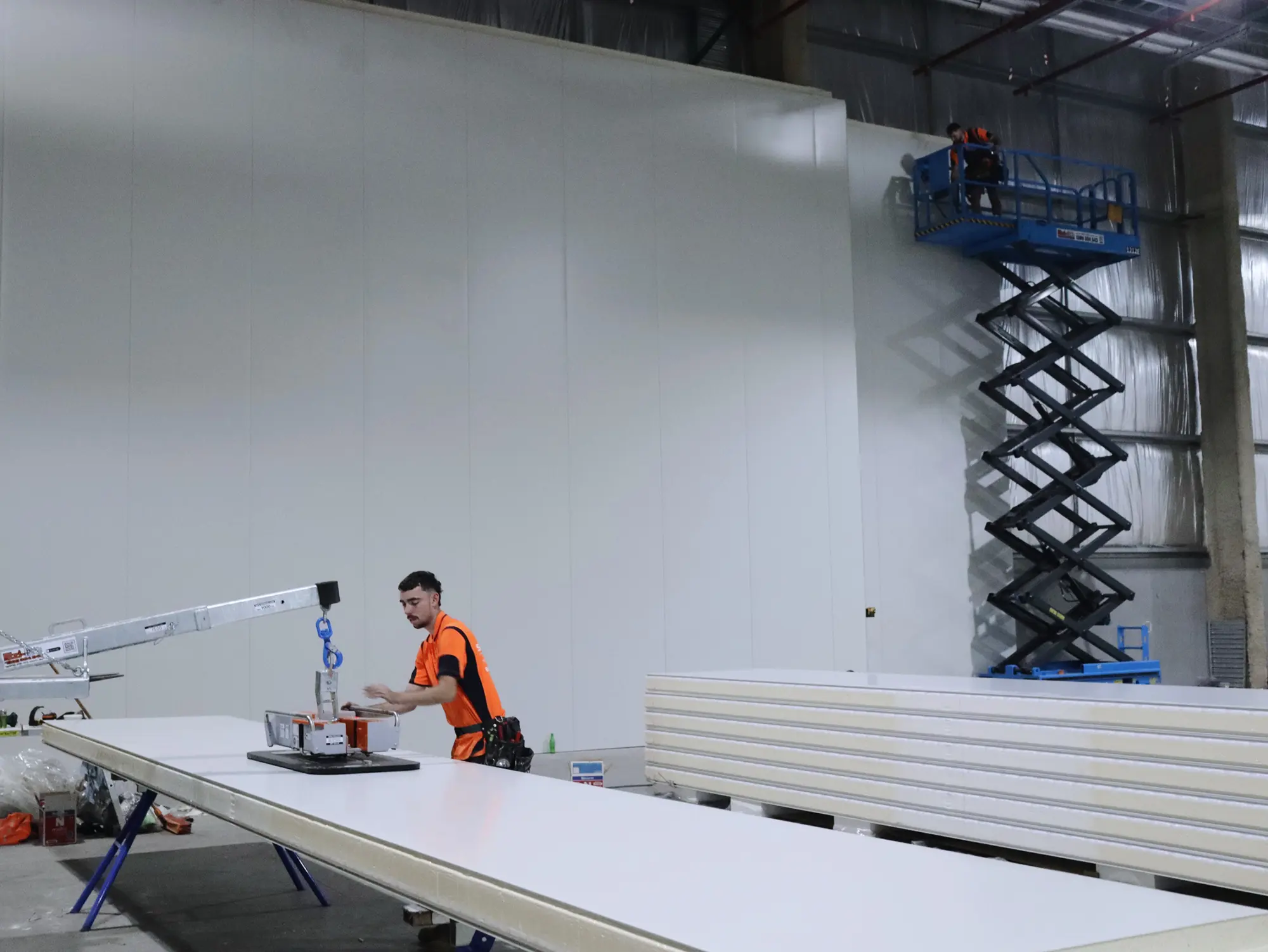
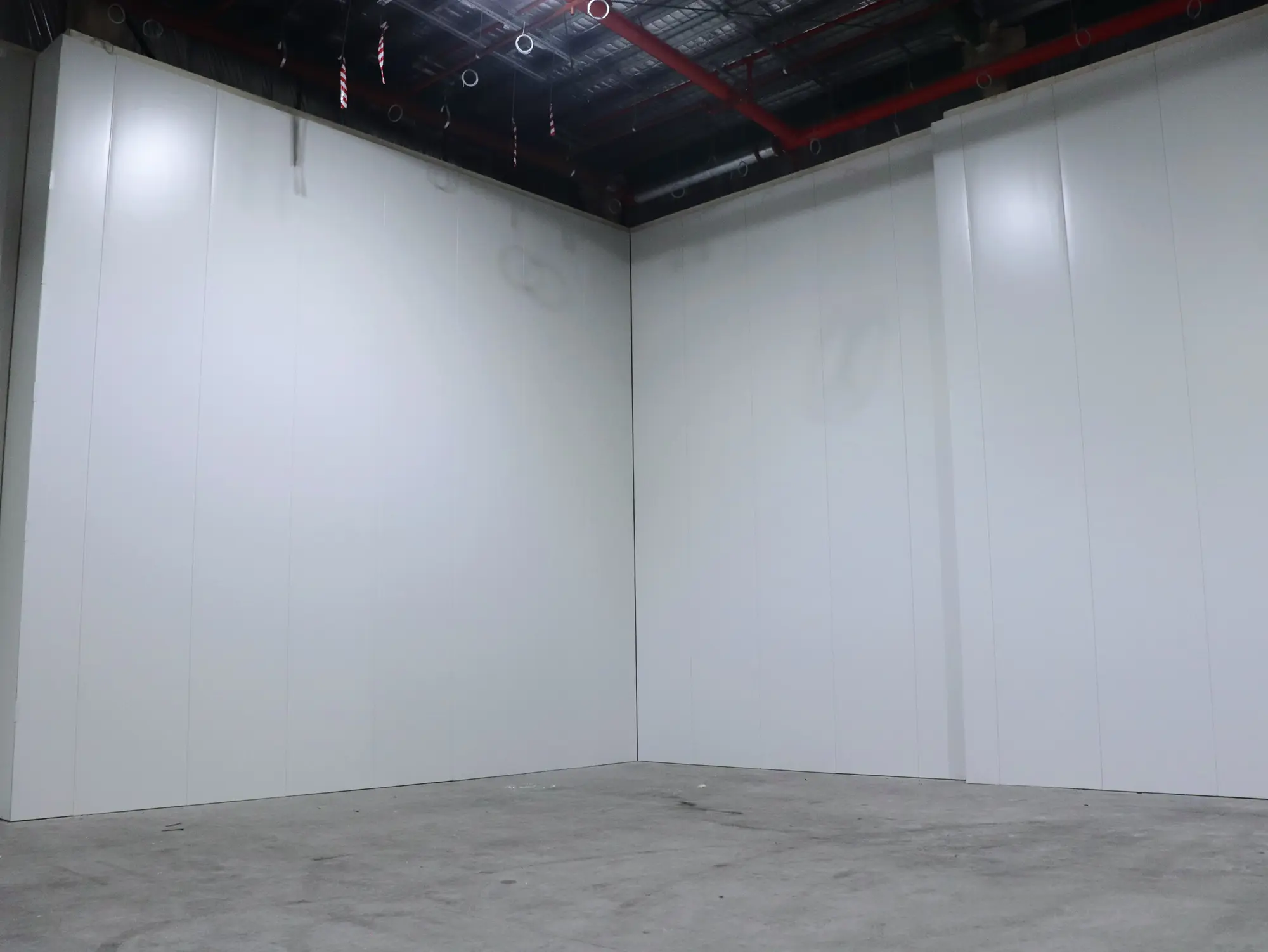
From our Sydney Markets Project at Homebush, Sydney. See all project photos.
Freezer Room Construction FAQs
What temperature does a freezer room run at?
Standard commercial freezer rooms typically run between -18 and -25 degrees Celsius. Blast freezers, used for rapidly bringing product down to temperature, commonly run at -30 or lower. The target temperature affects panel thickness, floor design and refrigeration sizing, so it is confirmed at the design stage.
What's the difference between a coolroom and a freezer room?
Coolrooms typically operate above 0 degrees, while freezer rooms run well below it. This changes panel thickness, door design and floor construction. Freezer rooms need heated door frames to prevent ice buildup on seals, and on-grade floors need frost heave protection, which standard coolrooms do not require.
Why do freezer floors crack or lift over time?
This is usually caused by frost heave, where moisture in the ground beneath a permanently sub-zero floor freezes and expands, gradually lifting and cracking the slab. It happens when frost protection, such as adequate floor insulation or underfloor heat trace, was not built into the original floor design.
Do all freezer rooms need underfloor heating?
Not all, but many do, particularly permanent on-grade installations running at lower temperatures. Whether it is required depends on target temperature, floor construction and how long the room will be in continuous use. This is assessed during site design rather than applied as a blanket rule.
How long does freezer room construction take?
Most commercial freezer rooms take three to eight weeks to construct, depending on size, target temperature and whether the floor requires engineered frost protection. Blast freezer facilities and larger multi-bay builds generally take longer.
How much does freezer room construction cost?
Freezer rooms typically cost more than equivalent coolrooms due to thicker PIR panels, heated door systems and higher refrigeration capacity. Panel supply sits above standard coolroom pricing, and the installed cost depends on target temperature, floor design and site conditions, so we provide project-specific quotes rather than flat rates.
Can an existing freezer room be extended or repaired instead of rebuilt?
Often, yes, particularly for panel damage, door seal failure or refrigeration issues. Floor problems caused by frost heave are more involved to correct and may require partial floor reconstruction. A site assessment will confirm what is realistic before assuming a full rebuild is needed.
Request a Free Site Inspection and Quote
Every project is different, so we start with a site visit rather than a guess over the phone. We assess your space, talk through temperature requirements and floor considerations, and put together a detailed quote based on what your business actually needs. No obligation, just a straight answer on what is involved and what it will cost.